Day 1: Core Accounting Concepts and the Accounting Cycle
Morning Session (9:00 AM – 12:30 PM):
- Welcome and Course Overview
- Introduction to the course objectives and structure.
- Icebreaker activity (to understand participants’ backgrounds and goals).
- Module 1: Basics of Accounting
- What is Accounting and its Importance?
- Key Accounting Terms and Concepts (Assets, Liabilities, Equity, Revenue, Expenses).
- The Double-Entry System: Understanding Debits and Credits.
Activity:
- Identifying and Classifying Transactions (Interactive Exercise).
Lunch Break (12:30 PM – 1:30 PM)
Afternoon Session (1:30 PM – 5:00 PM):
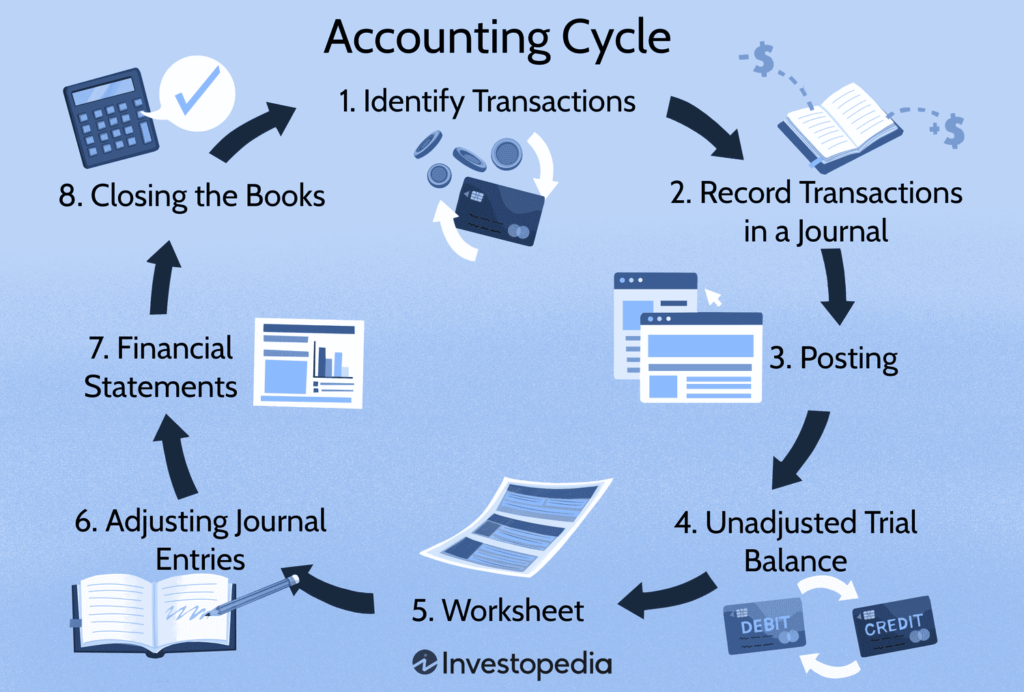
3. Module 2: The Accounting Cycle
- Recording Transactions in Journals.
- Posting to Ledgers.
- Adjusting Entries and Trial Balances.
- Hands-On Practice:
- Participants will practice journalizing and posting sample transactions to ledgers.
- Case Study:
- Completing an Accounting Cycle for a small business scenario.
Q&A and Day 1 Wrap-Up (4:45 PM – 5:00 PM)
Day 2: Financial Statements, Managerial Accounting, and Technology
Morning Session (9:00 AM – 12:30 PM):
- Module 3: Financial Statements
- Preparing and Understanding the Balance Sheet.
- Preparing and Understanding the Income Statement.
- Basics of the Cash Flow Statement.
- Activity:
- Interpreting and Analyzing Sample Financial Statements.
- Module 4: Managerial Accounting Basics
- Budgeting and Forecasting.
- Break-even Analysis and Decision-Making.
Lunch Break (12:30 PM – 1:30 PM)
Afternoon Session (1:30 PM – 4:30 PM):
4. Module 5: Technology in Accounting
- Overview of Accounting Software (QuickBooks, Xero).
- Hands-On Practice: Recording Transactions and Generating Financial Reports Using Software.
- Module 6: Ethics and Professional Standards in Accounting
- Importance of Ethical Practices.
- Discussion of Real-World Ethical Dilemmas in Accounting.
- Capstone Activity:
- Participants complete a final exercise that includes recording transactions, preparing financial statements, and analyzing financial health for a sample company.
Closing Session (4:30 PM – 5:00 PM):
- Review of Key Concepts.
- Participant Q&A.
- Feedback Session.
- Certificate Distribution and Closing Remarks.
Training Methodology:
- Interactive Presentations to explain key concepts.
- Hands-On Activities for practical application of skills.
- Group Discussions for collaboration and deeper understanding.
- Capstone Project for final assessment.
Course Objectives
By the end of this course, participants will:
- Understand fundamental accounting principles and concepts.
- Develop the ability to analyze and record business transactions.
- Gain proficiency in preparing and interpreting financial statements.
- Understand managerial accounting basics for decision-making.
- Learn about ethical practices and professional standards in accounting.
- Familiarize themselves with technology used in modern accounting.
Learning Outcomes
Participants will be able to:
- Explain the purpose and functions of accounting in a business environment.
- Identify, record, and classify business transactions accurately.
- Prepare key financial statements and analyze their components.
- Apply basic cost accounting techniques to support business decisions.
- Utilize accounting software to manage financial data effectively.
- Recognize and adhere to ethical standards in accounting practice.